Japanese Fluffy Pancakes Recipe (Jiggly Soufflé Pancakes at Home)
Easy Japanese fluffy pancakes recipe: tall, jiggly soufflé pancakes made with whipped meringue, steamed gently in a covered pan.
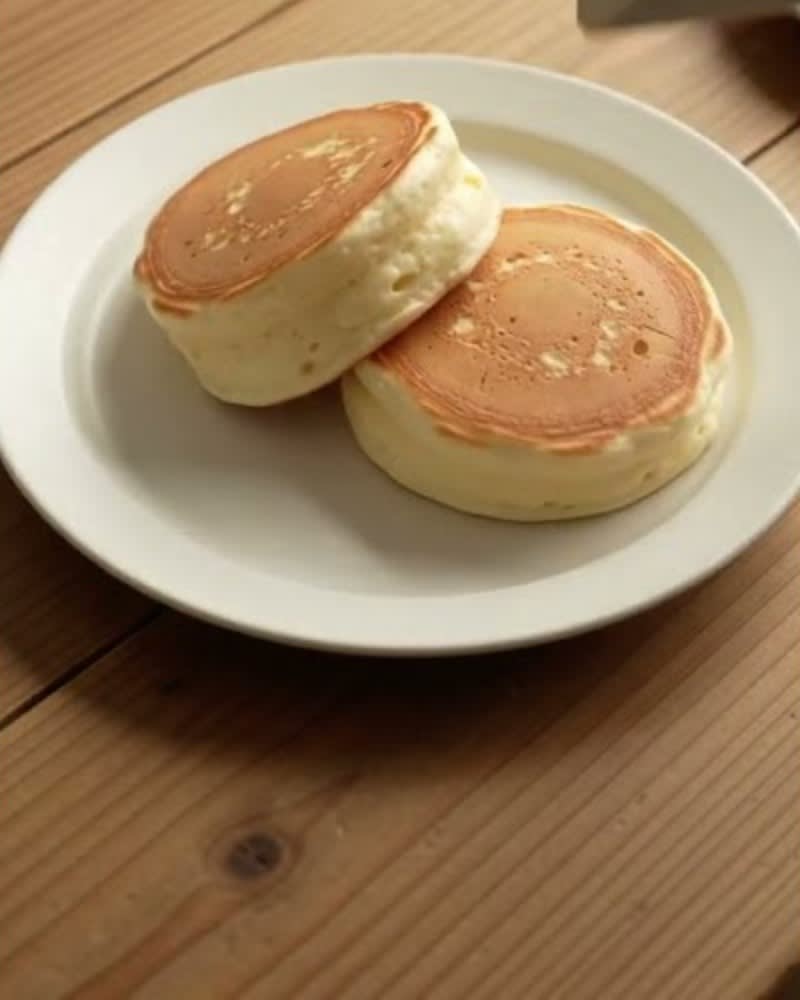
This Japanese fluffy pancakes recipe gives you the tall, wobbly soufflé pancakes that made cafés in Tokyo and Osaka famous, using only eggs, a little flour, milk and sugar. They are soft as a cloud inside, lightly golden outside, and they jiggle when you shake the plate.
In Japan they are called suflé pankēki, a mix of the French word soufflé and the English word pancake. Pancakes, or hotcakes, have been a Japanese café favourite for decades, but the extra-thick soufflé style became a craze in the 2010s, when shops in Harajuku and Osaka started lining up guests for plates of three trembling pancakes topped with whipped cream and fruit. Today they are a classic weekend brunch treat in kissaten coffee shops all over the country.
The secret is the meringue. Instead of mixing whole eggs into the batter, you whip the cold egg whites with sugar until they hold stiff, glossy peaks, then gently fold them into a thin yolk batter. Those millions of tiny air bubbles are what make the pancakes rise so high. They are cooked on very low heat with a splash of water and a lid, so the steam cooks the middle before the outside burns. Rush the heat and they collapse; be patient and they stay tall.
You do not need ring molds: just pile the batter high with a spoon and add more on top after a minute. Cake flour gives the softest result, but all-purpose flour works if you remove one teaspoon and add a little cornstarch. A few drops of lemon juice can replace cream of tartar to stabilise the meringue. For a dairy-free version, use oat or soy milk and serve with coconut whipped cream.
Serve them right away, because soufflé pancakes start to sink after a few minutes. The classic topping is a pat of butter, maple syrup and a dusting of powdered sugar, but whipped cream with strawberries, matcha cream, or a spoon of custard are popular café-style options. A cup of hot coffee or a glass of cold milk is all you need on the side.
Watch how it is made on our YouTube channel: https://youtube.com/shorts/3PxqYqdgPR8
Watch how it is made
Ingredients
- 2 large egg yolksSubstitute: keep the 2 whites for the meringue
- 2 tbsp milkSubstitute: oat or soy milk
- 0.5 tsp vanilla extract
- 30 g cake flourSubstitute: all-purpose flour with 1 tsp cornstarch
- 0.5 tsp baking powder
- 2 large egg whites, cold
- 0.25 tsp cream of tartarSubstitute: 1/2 tsp lemon juice
- 25 g caster sugar
- 1 tsp neutral oil, for the pan
- 2 tbsp water, for steaming
- 10 g butter, to serve
- 2 tbsp maple syrup, to serveSubstitute: honey
- 80 g fresh strawberries or berries, to serve
- 1 tsp powdered sugar, for dusting
Method
- Make the yolk batter. Whisk the egg yolks, milk and vanilla until smooth, then sift in the cake flour and baking powder and whisk just until no dry flour remains. The batter should be thick but runny.
- Whip the meringue. In a clean, grease-free bowl, beat the cold egg whites with the cream of tartar until foamy, then add the sugar in three parts and keep beating until you get stiff, glossy peaks that stand straight up.
- Fold gently. Stir one third of the meringue into the yolk batter to loosen it, then fold in the rest in two additions with a spatula, cutting down the middle and turning the bowl. Stop as soon as no white streaks remain so you keep the air.
- Heat the pan low. Warm a non-stick pan with a lid over the lowest heat and wipe it with a thin layer of oil using kitchen paper. The pan should be just warm, not hot.
- Pile the batter high. Spoon a tall mound of batter into the pan for each pancake (3 or 4 pancakes in total), leaving space between them. After a minute, add another spoonful on top of each to build height.
- Steam the first side. Add 1 tablespoon of water to the empty spaces in the pan, cover with the lid and cook on very low heat until the bottoms are golden and the sides look set.
- Flip carefully. Lightly oil a thin spatula, slide it under each pancake and turn it over with a gentle rolling motion. Add the remaining water, cover again and cook the second side.
- Check doneness. Press the side of a pancake lightly: it should spring back and feel bouncy. If the middle still feels wet, cover and cook for one more minute.
- Serve right away. Stack the pancakes on warm plates, top with butter, drizzle with maple syrup, add the berries and dust with powdered sugar. Eat immediately while they are tall and jiggly.
Use eggs straight from the fridge, because cold whites make a finer, more stable meringue, and make sure the bowl has no trace of yolk or grease or the whites will not whip. Keep the heat at the lowest setting the whole time; a heavy pan or an electric griddle at about 150°C gives the most even result. If your pancakes deflate after cooking, they were under-cooked in the middle, so add an extra minute under the lid next time. Cook the batter as soon as it is folded, because the meringue starts to break down within ten minutes.
Frequently asked questions
Why are Japanese pancakes so fluffy?
The egg whites are whipped into a stiff meringue and folded into the batter, so the pancakes are full of tiny air bubbles. Slow steaming under a lid sets that air without the pancakes collapsing.
Do I need ring molds to make soufflé pancakes?
No. Pile the batter high with a spoon and add a second spoonful on top after a minute. Ring molds give perfectly straight sides, but free-form pancakes are just as fluffy.
Why did my Japanese pancakes deflate?
Usually the meringue was under-whipped, the batter was over-mixed, or the centre was not cooked through. Whip to stiff peaks, fold gently and cook on very low heat with the lid on until the pancakes spring back.
Can I use all-purpose flour instead of cake flour?
Yes. Use 30 g of all-purpose flour minus one teaspoon, and replace that teaspoon with cornstarch for a softer, more tender crumb.
Can I make soufflé pancakes ahead of time?
They are best eaten straight from the pan because they sink as they cool. You can make the yolk batter a few hours ahead and keep it in the fridge, then whip the meringue just before cooking.
What is the difference between Japanese pancakes and American pancakes?
American pancakes use whole eggs and more flour and are cooked quickly on higher heat. Japanese soufflé pancakes rely on whipped egg whites, use very little flour and are steamed slowly, so they are taller, lighter and more custardy.