Sushi Roll Recipe (Homemade Japanese Maki Rolls with Tuna and Cucumber)
Easy sushi roll recipe: seasoned Japanese sushi rice, tuna, cucumber and avocado rolled in nori to make homemade maki at home.
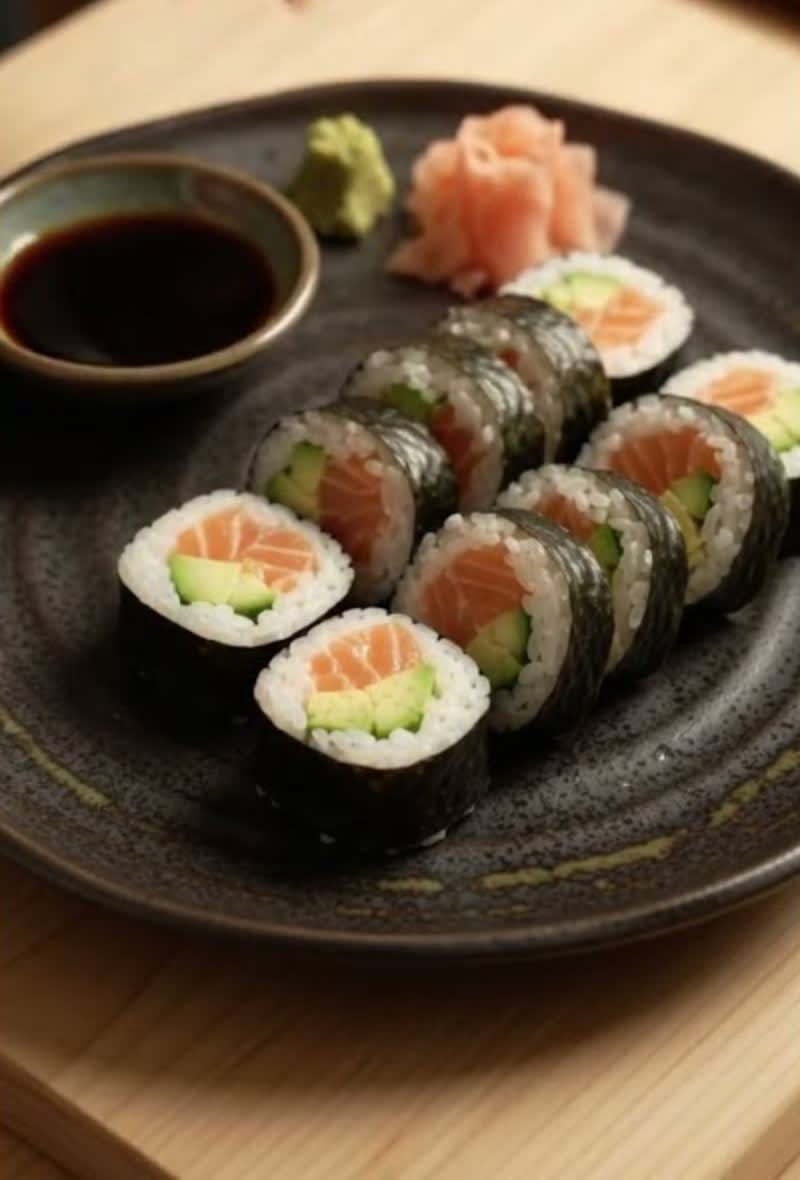
This sushi roll recipe shows you how to make real Japanese maki at home: perfectly seasoned sushi rice and fresh fillings wrapped tightly in crisp nori, then sliced into neat rounds. Once you have the rice right, rolling is easier than it looks, and you only need a bamboo mat and a sharp knife.
In Japanese, rolled sushi is called makizushi, from maki, meaning roll, and sushi, which describes rice seasoned with vinegar. Sushi began centuries ago as a way of preserving fish in fermented rice, and by the Edo period cooks in Tokyo were using rice vinegar to get that tangy flavour quickly. Rolled sushi became popular in the 1700s and 1800s, when sheets of dried nori seaweed made it easy to wrap rice and fillings. Thin rolls with one filling are called hosomaki, like tekkamaki with tuna and kappamaki with cucumber, while thick rolls with several fillings are futomaki.
The heart of good sushi is the rice. Japanese short-grain rice is rinsed until the water runs clear, soaked, then steamed so every grain is plump and slightly sticky. While it is still hot, it is mixed with sushi vinegar made from rice vinegar, sugar and salt, and fanned to cool so it turns glossy. Rice that is too hot tears the nori, and rice that is cold and hard will not stick, so aim for body temperature.
For fillings, always use sushi-grade or sashimi-grade fish from a trusted fishmonger. Salmon works in place of tuna, and cooked options such as crab sticks, cooked prawns, tamagoyaki omelette or teriyaki chicken make great rolls for anyone who prefers no raw fish. For a vegetarian version, try cucumber, avocado, carrot and pickled daikon. Use tamari instead of soy sauce for a gluten-free meal.
Serve the rolls with soy sauce for dipping, a little wasabi and slices of pickled ginger to refresh your palate between pieces. A bowl of miso soup and a simple seaweed or cucumber salad turn homemade sushi into a full Japanese dinner, perfect for a fun weekend meal where everyone rolls their own.
Watch how it is made on our YouTube channel: https://youtube.com/shorts/cg5Y6UeNspw
Watch how it is made
Ingredients
- 300 g Japanese short-grain sushi rice
- 360 ml water, for cooking the rice
- 45 ml rice vinegar
- 1 tbsp sugar
- 1 tsp fine salt
- 4 sheets of nori seaweed
- 150 g sushi-grade tuna, cut into long stripsSubstitute: sushi-grade salmon or crab sticks
- 120 g cucumber, seeds removed, cut into long batons
- 1 ripe avocado, sliced
- 1 tbsp toasted sesame seeds
- 1 tsp wasabi paste
- 60 ml soy sauce, to serveSubstitute: tamari for gluten-free
- 30 g pickled ginger (gari), to serve
Method
- Rinse and soak the rice. Wash the rice in cold water, swirling and draining several times until the water runs almost clear, then leave it to soak in the measured cooking water.
- Cook the rice. Bring the rice and water to a boil in a heavy pot, then cover tightly and simmer on the lowest heat until the water is absorbed. Turn off the heat and let it steam with the lid on.
- Make the sushi vinegar. Warm the rice vinegar, sugar and salt in a small pan or the microwave, stirring just until the sugar and salt dissolve. Do not let it boil.
- Season and cool the rice. Spread the hot rice in a wide bowl, pour over the vinegar and mix with a cutting motion using a rice paddle so you do not crush the grains. Fan the rice as you mix until it is glossy and about body temperature, then cover with a damp cloth.
- Prepare the fillings. Cut the tuna, cucumber and avocado into long thin strips. Set out a bowl of water with a splash of vinegar to wet your hands so the rice does not stick.
- Spread the rice. Lay a sheet of nori shiny side down on a bamboo mat, with the long edge facing you. With wet hands, spread a thin, even layer of rice over the nori, leaving a 2 cm strip bare at the far edge, and sprinkle with sesame seeds.
- Add the fillings. Dab a thin line of wasabi across the middle of the rice, then lay strips of tuna, cucumber and avocado in a neat line on top. Do not overfill or the roll will not close.
- Roll it tight. Lift the mat edge nearest you and roll it over the fillings until the rice meets the far side, pressing gently to make a firm cylinder. Keep rolling to seal it on the bare nori edge, then squeeze the mat lightly along the length to shape the roll.
- Slice and serve. Let the roll rest seam side down for a minute. Wet a very sharp knife, cut the roll in half, then each half into 4 pieces, wiping the knife between cuts. Repeat with the rest and serve with soy sauce, wasabi and pickled ginger.
Measure the water carefully, because sushi rice should be cooked slightly firmer than everyday rice so it can absorb the vinegar without turning mushy. Never put sushi rice in the fridge before rolling, as it hardens; keep it covered with a damp cloth at room temperature and use it within a few hours. Wrap your bamboo mat in cling film to keep it clean, and wipe your knife with a damp cloth before every slice for neat edges. Buy fish labelled sushi-grade or sashimi-grade, keep it very cold until the last moment, and eat the rolls the same day.
Frequently asked questions
What rice is best for sushi rolls?
Use Japanese short-grain rice, often sold as sushi rice. Its high starch content makes the grains sticky enough to hold a roll together. Long-grain rice like basmati will not work.
Is it safe to use raw fish in homemade sushi?
Only use fish sold as sushi-grade or sashimi-grade from a trusted fishmonger, which has been handled and often frozen to make it safe to eat raw. Keep it cold and eat the sushi the same day, or use cooked fillings instead.
Which side of the nori goes up?
Place the rough side up and the shiny side down. The rice sticks better to the rough side and the shiny side ends up on the outside of the roll, so it looks neater.
Can I make sushi rolls without a bamboo mat?
Yes. A clean kitchen towel covered with cling film or a sheet of baking paper works well. Roll slowly and press evenly to keep the roll tight.
Why does my sushi roll fall apart when I cut it?
The roll was too loose, overfilled, or the knife was dull or dry. Roll firmly, use less filling, and slice with a very sharp knife wiped with a damp cloth between each cut.
What is the difference between maki and sushi?
Sushi is the general name for dishes made with vinegared rice. Maki, or makizushi, is one type of sushi where the rice and fillings are rolled in nori and cut into pieces.