Tempura Recipe (Light and Crispy Japanese Shrimp and Vegetable Tempura)
Easy tempura recipe: light, lacy shrimp and vegetable tempura with an ice-cold batter and a quick tentsuyu dipping sauce, just like in Japan.
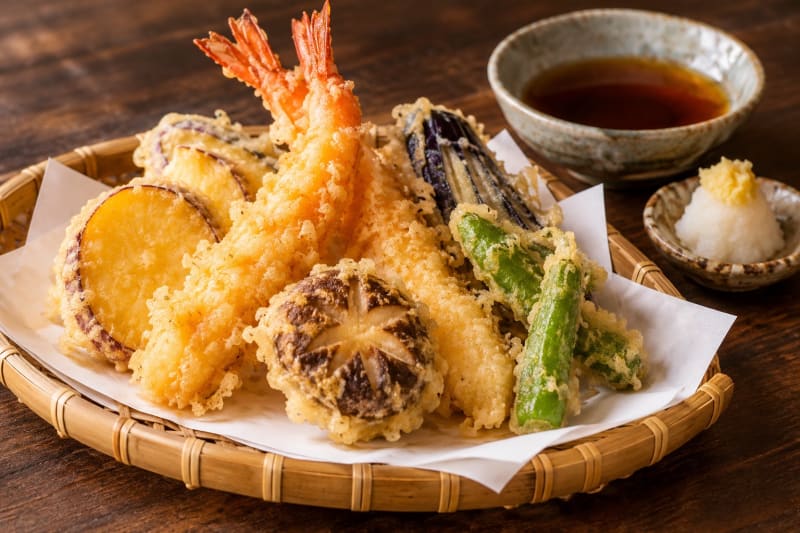
This tempura recipe gives you the light, lacy, shatteringly crisp shrimp and vegetables you get at a good Japanese tempura counter, made in an ordinary pot at home. The secret is not a special flour mix but temperature and restraint: ice-cold batter, hot oil and as little stirring as possible.
Tempura has an unusual history for a dish that feels so Japanese. Portuguese missionaries and traders arrived in Nagasaki in the 16th century and brought a habit of frying fish in batter, especially during the Catholic fasting periods called the Quatuor Tempora, or Ember Days. Many food historians believe the name tempura comes from that Latin and Portuguese word for these times. Over the Edo period the dish moved to Tokyo street stalls, where cooks fried skewers of fresh fish from the bay to order, and it slowly became the refined, almost weightless style known today.
Good tempura batter is the opposite of a smooth pancake batter. You mix cold water and egg, add low-protein flour, and stir only a few strokes with chopsticks so it stays lumpy. Cold liquid and minimal mixing keep gluten from forming, so the coating fries up thin and crunchy instead of bready. Oil at about 170 to 180°C cooks the outside in a minute or two while the shrimp stays juicy and the vegetables turn tender and sweet.
You can swap the vegetables freely. Kabocha squash, lotus root, green beans, asparagus, zucchini, carrot matchsticks and shiso leaves are all classic. White fish fillets or squid rings work in place of shrimp. If you cannot find cake flour, use plain flour with a spoonful of cornstarch, and a splash of sparkling water makes the batter even lighter. For a gluten-free version use rice flour and a gluten-free tamari in the sauce.
Serve tempura the moment it leaves the oil, with small bowls of warm tentsuyu and a mound of grated daikon and ginger stirred into the sauce. A little flaky salt or matcha salt is the other traditional dip. For a full meal, set it on steamed rice with a drizzle of sauce to make tendon, or float it on hot soba or udon noodles.
Watch how it is made on our YouTube channel: https://youtube.com/shorts/frbDo-vA-gE
Watch how it is made
Ingredients
- 12 large raw shrimp, peeled and deveined, tails left on
- 150 g sweet potato, sliced 5 mm thickSubstitute: kabocha squash
- 1 Japanese eggplant, cut into fans or 1 cm slices
- 6 fresh shiitake mushrooms, stems removed
- 8 shishito peppers, pricked once with a knifeSubstitute: green beans
- 1 large egg, cold
- 200 ml ice-cold waterSubstitute: ice-cold sparkling water
- 120 g cake flour or low-protein flour, chilledSubstitute: plain flour plus 1 tbsp cornstarch
- 2 tbsp extra flour for dusting
- 1000 ml neutral oil for frying (canola, rice bran or peanut)Substitute: add 2 tbsp sesame oil for a nutty aroma
- 200 ml dashi stock
- 50 ml soy sauce
- 50 ml mirin
- 100 g daikon radish, finely grated and lightly squeezed
- 1 tsp fresh ginger, finely grated
- 0.5 tsp flaky salt, to serve
Method
- Make the tentsuyu. Bring the dashi, soy sauce and mirin to a simmer in a small pan, cook for 1 minute, then keep warm on the lowest heat.
- Prepare the shrimp. Make 3 or 4 shallow cuts across the underside of each shrimp and press it gently flat so it stays straight in the oil. Pat the shrimp and all the vegetables completely dry.
- Heat the oil. Pour the oil into a deep heavy pot to at least 5 cm deep and heat it to 170°C (340°F). A drop of batter should sink halfway, then rise straight back up and sizzle.
- Mix the batter at the last moment. Beat the cold egg with the ice-cold water in a chilled bowl, add the flour all at once and stir just 8 to 10 strokes with chopsticks. It should be thin and lumpy with dry flour still visible. Do not whisk it smooth.
- Dust and dip. Lightly dust each piece with the extra flour, shake off the excess, then dip it in the batter and let the extra drip off for a second.
- Fry the vegetables. Slide 4 or 5 pieces into the oil at a time and fry for 2 to 3 minutes, turning once, until crisp and very pale gold. Sweet potato needs the full 3 minutes to soften.
- Fry the shrimp hotter. Raise the oil to 180°C (355°F) and fry the shrimp 3 or 4 at a time for about 90 seconds. Flick a few drops of batter over them with chopsticks for extra lacy crunch.
- Drain and keep the oil clean. Lift each batch onto a wire rack, not paper, so the bottom stays crisp. Skim floating bits of batter between batches so they do not burn and darken the oil.
- Serve right away. Stir the grated daikon and ginger into small bowls of warm tentsuyu, and serve the tempura immediately with the sauce and a pinch of flaky salt on the side.
Keep everything cold: chill the flour and bowl in the freezer for 15 minutes and set the batter bowl inside a larger bowl of ice. Make the batter in two small batches rather than one big one, because it warms up and turns gluey as it sits. Fry only a few pieces at once so the oil temperature stays steady, and use a thermometer if you have one. Strain the cooled oil through a fine sieve and you can use it once or twice more for frying.
Frequently asked questions
How do you pronounce tempura?
Tempura is pronounced TEM-poo-rah, with a light stress on the first syllable. In Japanese all three syllables are said fairly evenly: ten-pu-ra.
What is the secret to crispy tempura batter?
Use ice-cold water, low-protein flour and barely mix the batter so it stays lumpy. Cold and minimal stirring stop gluten forming, which keeps the coating thin and crisp instead of thick and bready.
What oil temperature is best for tempura?
Fry vegetables at about 170°C (340°F) and seafood at about 180°C (355°F). Too cool and the tempura absorbs oil and turns greasy; too hot and the batter browns before the inside cooks.
Can I make tempura batter without eggs?
Yes. Mix 120 g flour, 2 tbsp cornstarch and about 220 ml ice-cold sparkling water. Many Japanese cooks use egg-free batter, and it fries up very light.
What is tempura dipping sauce made of?
Tentsuyu is made from dashi, soy sauce and mirin, usually in a 4 to 1 to 1 ratio, served warm with grated daikon and ginger stirred in.
How do you keep tempura crispy?
Drain it on a wire rack instead of paper towels and serve it straight away. To reheat leftovers, bake them on a rack at 200°C (400°F) for 5 to 8 minutes; the microwave makes them soggy.