Korean BBQ at Home (Gogi-gui with Pork Belly, Bulgogi Beef and Ssamjang)
Korean BBQ at home made easy: crispy pork belly, sweet soy bulgogi beef, homemade ssamjang and lettuce wraps on one pan or grill.
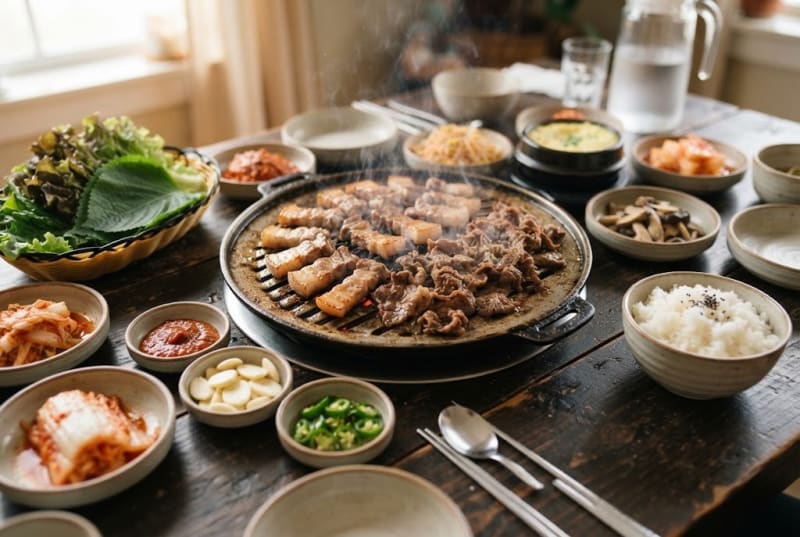
Korean BBQ at home is easier than most people think: you need good meat, one hot pan or tabletop grill, a quick marinade and a pile of fresh lettuce. In Korea this way of eating is called gogi-gui, which simply means "grilled meat" (gogi is meat, gui is grilling). It is the dinner friends share after work, with everyone cooking around the same grill and wrapping each bite by hand.
Grilling meat over fire has a long history on the Korean peninsula. A skewered meat dish called maekjeok is often named as the ancestor of bulgogi, and the modern table-grill restaurant became hugely popular in the 1970s and 80s, when pork belly (samgyeopsal, "three layers of flesh") turned into the country's favourite cut. Today most Korean BBQ meals mix an unmarinated cut, like pork belly, with a marinated one, like bulgogi beef.
That contrast is the heart of the flavour. Plain pork belly is cooked until its fat turns golden and crisp, then dipped in sesame oil with salt and pepper. The beef soaks in soy sauce, garlic, sesame oil and grated Asian pear, which brings sweetness and gently tenderises the thin slices. Each piece goes into a lettuce or perilla leaf with a dab of ssamjang, a thick paste of doenjang and gochujang, plus raw garlic and green chilli. That little parcel is called ssam.
You do not need a special grill. A cast iron pan, a griddle or an electric grill plate on the table all work; the key is high heat and small batches so the meat sears instead of steaming. Slice the beef very thin by freezing it for 30 minutes first, or buy pre-sliced bulgogi or shabu-shabu beef from an Asian market.
Swaps are simple. Use boneless chicken thighs in place of beef, or thick king oyster mushroom slices for a meat-free plate. No Asian pear? A grated apple or kiwi works, but use only a little kiwi or the beef turns mushy. Romaine or butter lettuce replaces perilla leaves.
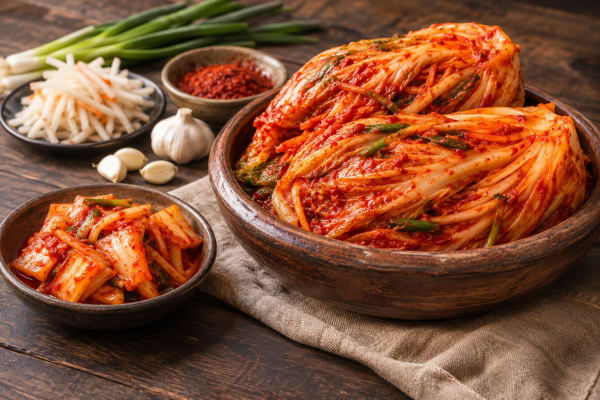
Serve Korean BBQ with steamed short-grain rice, kimchi (it is great grilled in the pork fat), a scallion salad called pa-muchim, and a simple doenjang soup to finish. Cold barley tea or a light lager suits the rich meat.
Watch how it is made on our YouTube channel: https://youtube.com/shorts/ecRBhVKrilo
Watch how it is made
Ingredients
- 500 g pork belly, skin off, sliced 1 cm thick
- 500 g beef ribeye or sirloin, sliced paper thinSubstitute: pre-sliced bulgogi beef
- 4 tbsp soy sauce
- 2 tbsp brown sugar
- 0.5 Asian pear, gratedSubstitute: 1 small apple, grated
- 5 garlic cloves, minced (plus extra sliced for wraps)
- 2 tbsp toasted sesame oil, divided
- 3 spring onions, thinly sliced
- 1 tsp toasted sesame seeds
- 0.5 tsp black pepper
- 2 tbsp doenjang (Korean soybean paste)Substitute: white miso
- 1 tbsp gochujang
- 1 tsp honey
- 1 head of lettuce, leaves separatedSubstitute: perilla leaves
- 2 green chillies, sliced
- 1 onion, cut into thick rings
- 0.5 tsp salt (for the sesame dip)
- 200 g napa cabbage kimchi, to grill and serve
- 4 bowls of steamed short-grain rice, to serve
Method
- Make the bulgogi marinade. Mix the soy sauce, brown sugar, grated pear, three minced garlic cloves, 1 tbsp sesame oil, black pepper and half the spring onions in a bowl.
- Marinate the beef. Add the thin beef slices, massage the marinade in with your hands and leave covered in the fridge for at least 1 hour, or up to overnight.
- Mix the ssamjang. Stir the doenjang, gochujang, honey, the remaining minced garlic, a little sesame oil and the sesame seeds into a thick paste. Loosen with a teaspoon of water if needed.
- Set up the table. Wash and dry the lettuce, slice extra garlic and the chillies, and stir the remaining sesame oil with the salt and a pinch of pepper in a small dish for the pork.
- Heat the grill. Get a cast iron pan, griddle or tabletop grill very hot over medium-high heat, about 3 minutes. No oil is needed for the pork.
- Grill the pork belly. Lay the strips flat and cook without moving until deep golden, then flip and crisp the other side. Cut into bite-size pieces with scissors right on the grill.
- Grill garlic, onion and kimchi in the fat. Push the pork aside and cook the onion rings, sliced garlic and some kimchi in the rendered fat until soft and caramelised.
- Cook the beef. Wipe out some of the fat, lift the beef from the marinade and cook in small batches in a single layer, turning once, until just caramelised at the edges.
- Wrap and eat. Put a piece of meat in a lettuce leaf with a little rice, ssamjang, garlic and chilli, fold it into one bite and eat straight away. Top with the remaining spring onions.
Freeze the beef for 30 minutes before slicing so you can cut it paper thin, and always cook in small batches: an overcrowded pan steams the meat instead of browning it. Keep the pork belly and beef on separate parts of the grill because the sugar in the bulgogi marinade burns quickly. Open a window or use the extractor fan, since pork belly smokes on high heat. Leftover meat makes excellent fried rice the next day with kimchi and a fried egg.
Frequently asked questions
What do I need for Korean BBQ at home?
A hot cast iron pan, griddle or electric grill, one plain cut like pork belly, one marinated cut like bulgogi beef, lettuce for wrapping, ssamjang, garlic, chillies, rice and kimchi.
What is the best meat for Korean BBQ?
Pork belly (samgyeopsal) and thinly sliced ribeye for bulgogi are the most popular. Beef short ribs (galbi), pork shoulder and chicken thighs are also great.
Can I do Korean BBQ without a grill?
Yes. A heavy cast iron skillet on the stove works very well. Get it very hot and cook small batches so the meat sears.
How long should I marinate bulgogi beef?
At least 1 hour and up to 24 hours. Because the slices are thin, 1 to 4 hours gives plenty of flavour.
What is ssamjang made of?
Ssamjang is a thick dipping paste made from doenjang (soybean paste) and gochujang (chilli paste), usually with garlic, sesame oil, sesame seeds and a little honey or sugar.
What side dishes go with Korean BBQ?
Steamed rice, kimchi, scallion salad (pa-muchim), seasoned bean sprouts, pickled radish and a bowl of doenjang jjigae soup are classic sides.