Bibimbap Recipe (Korean Mixed Rice with Gochujang Sauce)
Easy bibimbap recipe: Korean mixed rice with seasoned vegetables, beef, a fried egg and sweet-spicy gochujang sauce. Plus how to say bibimbap.
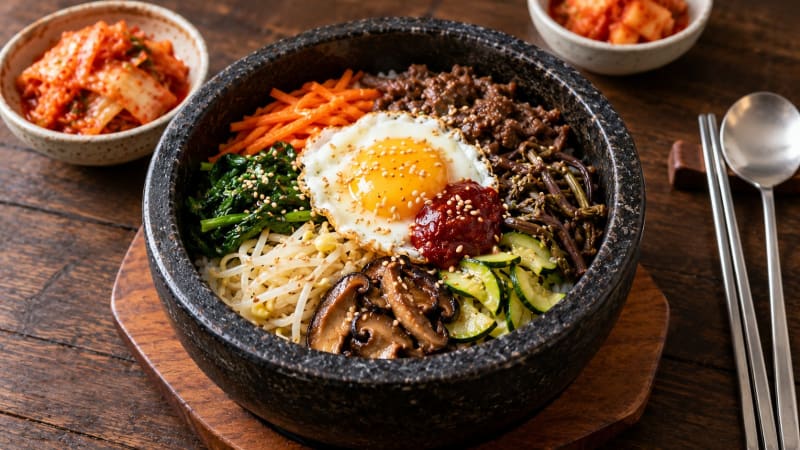
This bibimbap recipe shows you how to build Korea's famous mixed rice bowl at home: warm rice topped with colourful seasoned vegetables, savoury beef, a runny fried egg and a sweet, spicy gochujang sauce that you stir through everything just before eating.
The name says exactly what it is. Bibim means mixing and bap means cooked rice, so bibimbap is simply "mixed rice". An older name, goldongban, appears in the 19th-century Korean cookbook Siuijeonseo. One popular story links the dish to the custom of finishing leftover side dishes before the new year, and another to sharing the food from ancestral rites by mixing it into rice. Today the city of Jeonju is famous for its elaborate version, while dolsot bibimbap, served sizzling in a hot stone bowl, is loved for the crispy rice crust that forms on the bottom.
The technique is about preparing each topping separately and seasoning it lightly, so every part keeps its own colour, texture and flavour. Spinach and bean sprouts are blanched and dressed with sesame oil, garlic and salt, in the style of Korean namul side dishes. Carrot and zucchini are quickly stir-fried so they stay bright and slightly crisp. Mushrooms and thinly sliced beef are cooked with soy sauce, garlic and a little sugar. Arranged in sections over the rice, it looks beautiful, and once mixed every spoonful has a bit of everything.
Ingredient swaps are easy. Use mung bean sprouts if you cannot find soybean sprouts, and button or oyster mushrooms instead of shiitake. Ribeye or sirloin are best for the beef, but ground beef, chicken or firm tofu all work. For a vegetarian bowl, leave out the beef and add extra mushrooms and tofu. Short-grain rice gives the right sticky, slightly chewy texture, and day-old rice crisps best in a stone bowl. Gochujang brands vary in heat, so taste the sauce and adjust the sugar.
Serve bibimbap with kimchi and a simple soup such as doenjang-guk or a light seaweed soup. Bring it to the table unmixed so everyone sees the colours, then add sauce to taste and mix well with a spoon.
Watch how it is made on our YouTube channel: https://youtube.com/shorts/_tiVfDN8IzM
Watch how it is made
Ingredients
- 400 g short-grain white rice (uncooked)Substitute: sushi rice
- 250 g beef ribeye or sirloin, thinly slicedSubstitute: ground beef, chicken or firm tofu
- 3 tbsp soy sauce (divided)
- 2 tsp sugar (for the beef)
- 3 tbsp toasted sesame oil (divided)
- 4 garlic cloves, minced (divided)
- 200 g soybean sproutsSubstitute: mung bean sprouts
- 200 g fresh spinach
- 1 medium carrot, cut into matchsticks
- 1 small zucchini, cut into matchsticks
- 6 shiitake mushrooms, slicedSubstitute: button or oyster mushrooms
- 4 eggs
- 2 tbsp neutral oil
- 1 tsp salt (divided)
- 4 tbsp gochujang (Korean chili paste)
- 1 tbsp sugar or honey (for the sauce)
- 1 tbsp rice vinegar
- 1 tbsp water
- 1 tbsp toasted sesame seeds
Method
- Cook the rice. Rinse the rice until the water runs almost clear, then cook it in a rice cooker or covered pot with 480 ml water for about 15 minutes, and let it steam off the heat for 10 minutes.
- Marinate the beef. Mix the beef with 2 tablespoons soy sauce, the 2 teaspoons sugar, 1 tablespoon sesame oil and half the garlic. Leave it for 15 minutes while you prepare the vegetables.
- Cook the bean sprouts. Boil the soybean sprouts in salted water with the lid on for 5 minutes, then drain. Toss with a pinch of salt, a little garlic and 1 teaspoon sesame oil.
- Blanch the spinach. Drop the spinach into boiling water for 30 seconds, rinse under cold water and squeeze out as much water as you can. Season with a pinch of salt, a little garlic and 1 teaspoon sesame oil.
- Stir-fry the vegetables. Heat a little oil in a pan and cook the carrot with a pinch of salt for 1 to 2 minutes until just tender. Set aside, then do the same with the zucchini. Keep them separate so the colours stay clean.
- Cook the mushrooms and beef. Fry the mushrooms with the remaining soy sauce and garlic for 3 minutes, then set aside. Cook the beef in a hot pan for 2 to 3 minutes until browned and just cooked through.
- Mix the gochujang sauce. Stir the gochujang, remaining sesame oil, sugar or honey, rice vinegar, water and sesame seeds until smooth. Taste and add more sugar or water if it is too strong.
- Fry the eggs. Fry the eggs sunny-side up in a little oil for about 3 minutes, until the whites are set and the yolks are still runny.
- Assemble and mix. Divide the rice between 4 bowls, arrange each topping in its own section around the edge and place the beef and egg in the middle. Add sauce to taste, sprinkle with sesame seeds and mix everything together before eating.
For dolsot bibimbap, brush a stone bowl or small cast-iron pan with sesame oil, add the rice and toppings and heat it over medium heat for 5 to 7 minutes until the rice crackles and forms a golden crust. Season each topping lightly; the gochujang sauce brings most of the punch. The vegetables and beef can be prepped a day ahead and kept in separate containers, so on the night you only need rice and eggs. Bibimbap is pronounced BEE-bim-bahp.
Frequently asked questions
What does bibimbap mean?
Bibimbap means mixed rice in Korean: bibim means mixing and bap means cooked rice. The dish is meant to be stirred together just before eating.
How do you pronounce bibimbap?
Bibimbap is pronounced BEE-bim-bahp, with three short syllables and a soft p at the end.
What is bibimbap sauce made of?
The classic sauce is gochujang (Korean chili paste) mixed with sesame oil, a little sugar or honey, rice vinegar, water and toasted sesame seeds. Some cooks add minced garlic.
What is the difference between bibimbap and dolsot bibimbap?
Dolsot bibimbap is served in a very hot stone bowl, so the rice keeps sizzling at the table and forms a crispy golden crust on the bottom. Regular bibimbap is served in an ordinary bowl.
Can I make bibimbap vegetarian?
Yes. Leave out the beef and add more mushrooms, pan-fried tofu or extra vegetables. Keep the egg for a vegetarian bowl, or skip it to make it vegan.
What rice is best for bibimbap?
Short-grain white rice is traditional because it is slightly sticky and chewy. Sushi rice works well, and day-old rice crisps up best in a hot stone bowl.