Smorrebrod Recipe (Classic Danish Smørrebrød Open Sandwiches 3 Ways)
Smorrebrod recipe: classic Danish open sandwiches on buttered rye with egg and shrimp, roast beef with remoulade, and new potato with chives.
This smorrebrod recipe brings the heart of the Danish lunch table to your kitchen: thin slices of dark rye bread spread generously with butter and piled with carefully arranged toppings, eaten with a knife and fork. Smørrebrød is not a quick sandwich grabbed on the go. It is a small, beautiful meal, and in Denmark it is served at family lunches, Christmas tables and in old-fashioned lunch restaurants in Copenhagen that list dozens of combinations.
The name literally means "butter and bread", from smør (butter) and brød (bread). The butter is not optional: it acts as a seal that stops the topping from soaking the rye. The bread is rugbrød, a dense, slightly sour sourdough rye full of whole grains and seeds. Its strong flavour is the base that every topping is built around.
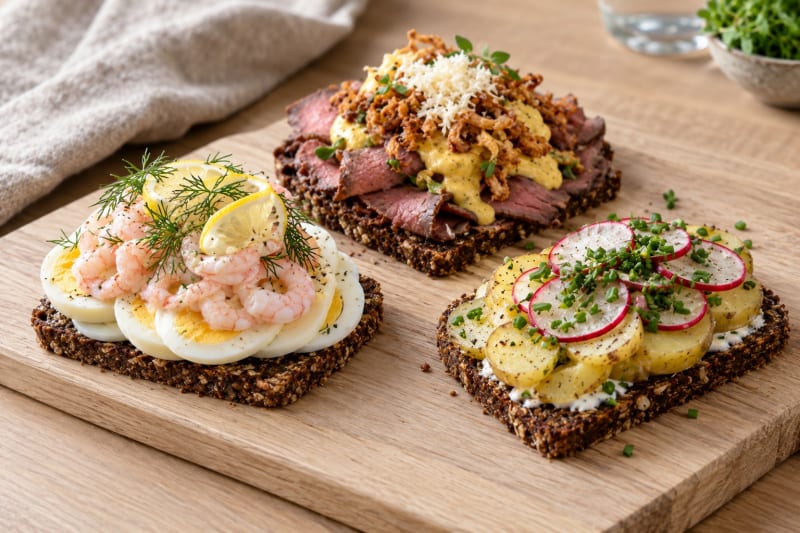
Danes follow a loose order when eating smørrebrød: fish first, then meat, then cheese. This recipe makes three classics so you can do the same. Æg og rejer pairs sliced boiled egg with sweet cold-water shrimp, mayonnaise, dill and lemon. Roastbeef comes with remoulade, the tangy yellow Danish pickle mayonnaise, plus crispy fried onions and grated horseradish. Kartoffelmad, the humble new-potato sandwich, is topped with chives, radishes and a little mayonnaise, and in summer it is a favourite of its own.
The technique is all about balance and neatness. Each slice gets one main topping, a creamy element, something sharp or pickled and something fresh and green. Keep the toppings generous so you can barely see the bread, but arrange them so every bite gets a bit of everything.
If you cannot find Danish rye, use the darkest, densest German-style rye or pumpernickel you can find, sliced about 1 cm thick. Swap the shrimp for smoked salmon, the roast beef for leftover roast pork, or add pickled herring for a very traditional fish course. Store-bought remoulade works, but the quick homemade version below takes five minutes.
Serve smørrebrød on a big board or plates with cold beer or aquavit for a proper Danish lunch, or with sparkling water and a simple cucumber salad.
Watch how it is made on our YouTube channel: https://youtube.com/shorts/C9qnSXhfoQY
Watch how it is made
Ingredients
- 12 thin slices Danish rye bread (rugbrød)Substitute: dense German rye or pumpernickel
- 60 g salted butter, softened
- 4 eggs
- 200 g cooked peeled cold-water shrimpSubstitute: smoked salmon
- 6 tbsp mayonnaise
- 250 g thinly sliced rare roast beef
- 3 tbsp finely chopped sweet pickles or cornichons
- 1 tsp mild curry powder
- 0.25 tsp ground turmeric
- 1 tsp Dijon mustard
- 40 g crispy fried onions
- 1 tbsp freshly grated horseradishSubstitute: 1 tsp prepared horseradish
- 400 g small new potatoes
- 4 radishes, thinly sliced
- 2 tbsp chopped chives
- 2 tbsp fresh dill sprigs
- 1 lemon, cut into thin wedges
Method
- Boil the potatoes. Cook the new potatoes in salted water until a knife slides in easily, then drain and let them cool completely. Warm potatoes will melt the butter and make the bread soggy.
- Boil the eggs. Lower the eggs into boiling water and cook for 9 minutes, then move them straight into cold water. You want firm yolks that still look bright yellow.
- Make the remoulade. Stir 3 tablespoons of the mayonnaise with the chopped pickles, curry powder, turmeric and mustard. It should be pale yellow, tangy and chunky. Season with a pinch of salt.
- Butter the bread. Spread every slice of rye right to the edges with a thin but complete layer of soft butter. This seal is what keeps the bread firm under the toppings.
- Build the egg and shrimp. Peel and slice the eggs and lay them in overlapping rows on 4 slices. Pile the shrimp on top, add a small spoon of mayonnaise, a dill sprig and a lemon wedge.
- Build the roast beef. Fold the roast beef slices loosely in waves over 4 slices so they have height. Add a spoonful of remoulade, scatter over crispy onions and finish with grated horseradish.
- Build the potato smørrebrød. Slice the cold potatoes about 5 mm thick and shingle them over the last 4 slices. Add tiny dots of mayonnaise, the radish slices, chives, flaky salt and black pepper.
- Serve right away. Arrange the open sandwiches on a board, fish first, and eat them with a knife and fork within an hour, while the toppings are fresh and the bread is still firm.
Slice the rye thinly, about 1 cm, so the toppings are the star and the bread does not dominate. Always butter right to the edges, even under mayonnaise-based toppings. Prepare every component ahead (eggs, potatoes, remoulade) and keep them chilled, but assemble no more than an hour before eating. Danes eat smørrebrød in order: fish, then meat, then cheese or vegetable, with fresh plates between if you are being formal. For a party, make half-size slices so guests can try several kinds.
Frequently asked questions
How do you pronounce smørrebrød?
It sounds roughly like SMUR-uh-brurth. The ø is like the vowel in the English word 'her', and the final d is a soft sound close to the th in 'the'.
What does smørrebrød mean?
It means 'butter and bread' in Danish, from smør (butter) and brød (bread). The name points to the buttered rye base that every topping sits on.
What bread is used for smørrebrød?
Traditional smørrebrød uses rugbrød, a dense, dark Danish sourdough rye bread with whole grains and seeds. Pumpernickel or a dense German rye are the closest substitutes.
What are the most popular smørrebrød toppings?
Classics include pickled herring with onions, egg and shrimp, roast beef with remoulade and crispy onions, liver pâté with bacon and mushrooms, potato with chives, and fried fish fillet with remoulade.
How do you eat smørrebrød?
With a knife and fork, not by hand. Danes usually start with fish toppings, move on to meat and finish with cheese, often with cold beer or a small glass of aquavit.
Can I make smørrebrød ahead of time?
Prepare the toppings up to a day ahead and chill them, but assemble the sandwiches no more than about an hour before serving so the bread stays firm.