Eggplant Moussaka Recipe (Classic Greek Moussaka with Béchamel)
Eggplant moussaka recipe the Greek way: roasted aubergine, cinnamon-spiced lamb ragù and a thick golden béchamel, baked until set.
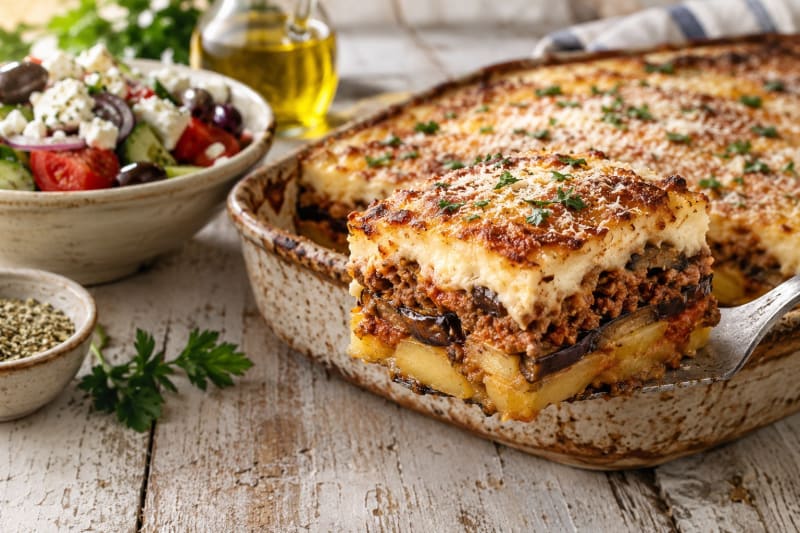
This eggplant moussaka recipe is the Greek classic you find in every taverna and on every Sunday table: layers of soft roasted aubergine, a lamb or beef ragù warmed with cinnamon and allspice, and a thick, golden béchamel that sets into a custardy crown in the oven.
The word moussakas (μουσακάς) came into Greek from the Ottoman kitchen, and similar layered dishes are cooked from the Balkans to the Levant. The version most people picture today, topped with a tall French-style béchamel, was shaped in the 1920s by the Greek chef Nikolaos Tselementes, who trained in Europe and wrote the cookbook that sat in almost every Greek home. Before him, moussaka was usually finished with a simple egg and yogurt topping, and you still see that in villages.
The flavour comes from contrast. The aubergine turns silky and sweet, the meat sauce is rich with tomato, red wine and a gentle warm spice that reads as savoury, not sweet, and the béchamel brings nutmeg and a salty, nutty bite from kefalotyri or Parmesan. The key technique is to cook out the moisture at every stage: salt and roast the eggplant instead of frying it in a lake of oil, reduce the ragù until it is thick, and make the béchamel stiff with egg yolks so it slices cleanly.
Swaps are easy. Use beef or a mix of beef and lamb if lamb is hard to find. Kefalotyri can be replaced with Parmesan or Pecorino. Many Greek cooks add a bottom layer of sliced fried potatoes, which makes the moussaka sturdier and helps it hold its shape; courgettes can join the aubergine in summer. For a meat-free version, swap the ragù for brown lentils cooked the same way.
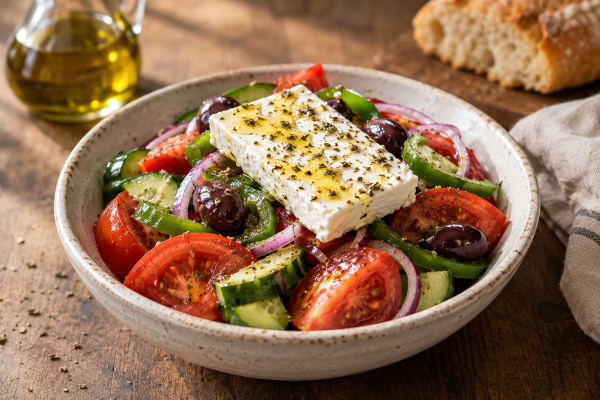
The hardest part is waiting. Let the moussaka rest for at least 30 minutes, ideally an hour, before cutting, so the layers set. Serve it warm, not piping hot, with a crisp Greek salad, crusty bread and a glass of red wine. It is even better the next day.
Watch how it is made on our YouTube channel: https://youtube.com/shorts/uGUXtTLU_uA
Watch how it is made
Ingredients
- 3 large eggplants (aubergines), about 1.2 kg, sliced 1 cm thick
- 1 tbsp salt, for the eggplant
- 4 tbsp olive oil, for brushing
- 2 medium potatoes, peeled and sliced 5 mm thickSubstitute: optional, or more eggplant
- 700 g minced lambSubstitute: minced beef or a mix
- 2 tbsp olive oil, for the sauce
- 1 large onion, finely chopped
- 3 garlic cloves, minced
- 2 tbsp tomato paste
- 120 ml dry red wineSubstitute: beef stock
- 400 g canned crushed tomatoes
- 1 cinnamon stickSubstitute: 1/2 tsp ground cinnamon
- 0.5 tsp ground allspice
- 1 tsp dried oregano
- 2 bay leaves
- 1 tsp sugar
- 2 tbsp chopped fresh parsley
- 100 g unsalted butter, for the béchamel
- 100 g plain flour
- 1000 ml whole milk, warmed
- 3 egg yolks
- 80 g kefalotyri cheese, gratedSubstitute: Parmesan or Pecorino
- 0.25 tsp freshly grated nutmeg
- 1 tsp salt and black pepper, to taste
Method
- Salt the eggplant. Lay the eggplant slices in a colander, sprinkle with salt and leave for 30 minutes to draw out bitter juices, then pat completely dry with paper towels.
- Roast the vegetables. Heat the oven to 220°C (430°F). Brush the eggplant and potato slices with olive oil, spread them on lined trays and roast until soft and golden, turning once, about 25 minutes.
- Brown the meat. Heat the olive oil in a wide pan, soften the onion for 5 minutes, add the garlic, then the lamb. Cook over high heat, breaking it up, until browned and the liquid has evaporated.
- Build the ragù. Stir in the tomato paste for a minute, pour in the wine and let it bubble away. Add the tomatoes, cinnamon, allspice, oregano, bay leaves, sugar, salt and pepper. Simmer uncovered until thick and almost dry, about 30 minutes. Remove the cinnamon and bay, and stir in the parsley.
- Make the béchamel. Melt the butter, whisk in the flour and cook for 2 minutes without browning. Gradually whisk in the warm milk and cook until thick, about 5 minutes. Off the heat, whisk in the egg yolks one at a time, then half the cheese and the nutmeg. Season to taste.
- Layer the moussaka. Turn the oven down to 180°C (350°F). In a 23 x 33 cm baking dish, lay the potatoes, then half the eggplant, all the meat sauce and the rest of the eggplant, pressing each layer down.
- Top and bake. Spread the béchamel evenly over the top, sprinkle with the remaining cheese and bake until deep golden and set, about 45 minutes.
- Rest before slicing. Let the moussaka stand for at least 30 minutes so the layers firm up, then cut into squares and serve warm.
Dry ingredients make the best moussaka: pat the salted eggplant really dry, roast rather than fry it so it does not soak up oil, and reduce the meat sauce until a spoon drawn through it leaves a clear path. Keep the béchamel thick, about the texture of soft mashed potato, and add the yolks off the heat so they do not scramble. You can assemble the whole dish a day ahead, chill it, and bake it straight from the fridge with 15 extra minutes. Leftovers freeze well in portions for up to 3 months.
Frequently asked questions
What is moussaka made of?
Greek moussaka is made of layers of roasted or fried eggplant, often a base of potatoes, a minced lamb or beef sauce with tomato, wine and cinnamon, and a thick béchamel topping with cheese and nutmeg.
Do you have to salt eggplant for moussaka?
It is worth it. Salting for 30 minutes pulls out moisture and any bitterness, so the eggplant roasts to a silky texture and the moussaka does not turn watery.
Should moussaka have potatoes?
Potatoes are optional. Many Greek families add a bottom layer of sliced potatoes because it makes the moussaka firmer and easier to slice, while others use only eggplant.
Why is my moussaka watery?
Usually the eggplant was not dried well or the meat sauce was not reduced enough. Cook the ragù until it is thick and let the moussaka rest at least 30 minutes before cutting.
Can I make moussaka ahead of time?
Yes. Assemble it up to a day ahead and keep it covered in the fridge, then bake it from cold, adding about 15 minutes. Baked moussaka also reheats well and tastes even better the next day.
What is the difference between moussaka and lasagna?
Moussaka uses sliced eggplant instead of pasta sheets, a cinnamon-spiced lamb or beef sauce and one thick béchamel layer on top, while lasagna layers pasta, ragù and béchamel several times.