Pad Thai Recipe (Authentic Tamarind Pad Thai Sauce)
Authentic pad thai recipe with a homemade tamarind, palm sugar and fish sauce pad thai sauce, shrimp, tofu and peanuts. Ready in 45 minutes.
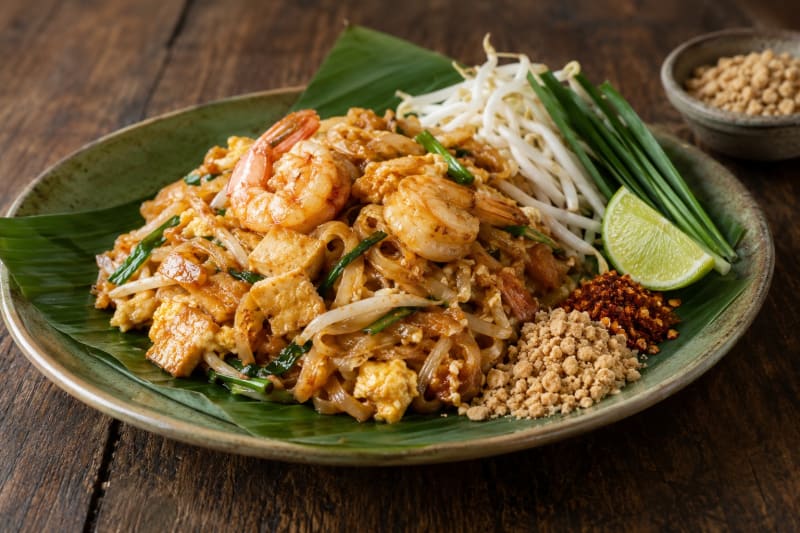
This pad thai recipe with sauce made from scratch is the version you get from a hot wok on a Bangkok street corner: chewy rice noodles coated in a glossy sweet, sour and salty sauce, tossed with shrimp, tofu, egg, crunchy bean sprouts and plenty of crushed peanuts. Once you have made the sauce yourself, the sticky bottled kind will never taste the same again.
The full Thai name is kuay teow pad Thai, which simply means stir-fried rice noodles, Thai style. Noodles came to Thailand with Chinese cooks, but pad thai as we know it took shape in the late 1930s and 1940s, when the government of Prime Minister Plaek Phibunsongkhram promoted rice noodles as a cheap, home-grown national dish. Street vendors spread it across the country, and today it is one of the most famous Thai dishes in the world.
The heart of the dish is the pad thai sauce. Tamarind gives a fruity sourness, palm sugar a round caramel sweetness and fish sauce the salty, savoury depth. Taste it before it hits the wok: it should be sour first, then sweet, then salty, with no single flavour shouting. The other secret is the noodles. Soak dried flat rice noodles in room temperature water until bendy but still firm, never boiled, so they finish cooking in the sauce and stay springy instead of turning to mush. Cook in a very hot wok and in small batches, two portions at a time, so everything fries rather than steams.
Swaps are easy. Use chicken thighs or extra tofu instead of shrimp, and soy sauce plus a pinch of salt for fish sauce to make it vegetarian. If you cannot find palm sugar, light brown sugar works. Tamarind concentrate varies a lot in strength, so add it slowly. Sweet preserved radish and dried shrimp are traditional, but the dish is still very good without them.
Serve pad thai straight from the wok with lime wedges, extra peanuts, chili flakes, raw bean sprouts and a few garlic chives on the side so everyone can season their own plate, just like the condiment caddy at a Thai noodle stall.
Watch how it is made on our YouTube channel: https://youtube.com/shorts/JCXzh4qpLRA
Watch how it is made
Ingredients
- 200 g dried flat rice noodles (3-5 mm, sen lek)
- 3 tbsp tamarind concentrateSubstitute: 2 tbsp lime juice plus 1 tsp brown sugar
- 2.5 tbsp fish sauceSubstitute: light soy sauce for vegetarian
- 3 tbsp palm sugar, finely choppedSubstitute: light brown sugar
- 3 tbsp neutral oil
- 200 g raw shrimp, peeled and deveinedSubstitute: sliced chicken thigh
- 100 g extra-firm tofu, cut into small cubes
- 3 garlic cloves, finely chopped
- 2 shallots, thinly sliced
- 1 tbsp sweet preserved radish (chai po), choppedSubstitute: leave out
- 1 tbsp small dried shrimpSubstitute: leave out
- 2 eggs
- 150 g bean sprouts, plus extra to serve
- 40 g garlic chives, cut into 4 cm lengthsSubstitute: spring onions
- 40 g roasted peanuts, roughly crushed
- 1 tsp Thai chili flakes, to taste
- 1 lime, cut into wedges
Method
- Soak the noodles. Cover the dried rice noodles with room temperature water and soak until soft and bendy but still a little firm in the centre, then drain well.
- Make the pad thai sauce. Warm the tamarind, fish sauce and palm sugar in a small pan, stirring until the sugar melts. Taste: it should be sour, sweet and salty in balance. Set aside.
- Prep everything. Have the shrimp, tofu, garlic, shallots, radish, dried shrimp, eggs, sprouts, chives and peanuts next to the stove, because the wok moves fast.
- Fry the tofu and aromatics. Heat 2 tbsp oil in a wok over high heat. Fry the tofu until golden, then add the shallots, garlic, radish and dried shrimp and stir for 30 seconds until fragrant.
- Cook the shrimp. Add the shrimp and stir-fry until just pink, then push everything to one side of the wok.
- Add the noodles and sauce. Add the drained noodles and pour in the sauce. Toss constantly until the noodles absorb the sauce and turn soft and glossy. Add a splash of water if they look dry or stiff.
- Scramble the eggs. Push the noodles aside, add the remaining oil and crack in the eggs. Let them set for a few seconds, scramble lightly, then fold through the noodles.
- Finish with sprouts and chives. Toss in the bean sprouts, garlic chives and half the peanuts for 30 seconds so they stay crunchy.
- Serve right away. Plate the pad thai and top with the rest of the peanuts. Serve with lime wedges, chili flakes and extra raw sprouts on the side.
Never boil the noodles: soaked noodles finish cooking in the sauce and stay chewy. Cook no more than two portions at a time, because a crowded wok steams the noodles and makes them clump. Tamarind concentrate and palm sugar differ by brand, so always taste the sauce first and adjust with more fish sauce, sugar or tamarind. If the noodles are still firm after the sauce is absorbed, add water a tablespoon at a time rather than more sauce.
Frequently asked questions
What is pad thai sauce made of?
Authentic pad thai sauce is made from tamarind, palm sugar and fish sauce. Some cooks add a little chili or oyster sauce, but the classic balance is sour, sweet and salty from those three ingredients.
Can I use ketchup instead of tamarind in pad thai?
Ketchup is a common shortcut outside Thailand, but it changes the flavour and colour. If you have no tamarind, use lime juice with a little extra sugar for sourness instead.
Why are my pad thai noodles mushy or sticky?
The noodles were usually soaked in hot water or boiled, or the wok was overcrowded. Soak them in room temperature water, drain well and cook in small batches over high heat.
Which noodles are best for pad thai?
Use dried flat rice noodles about 3 to 5 mm wide, often labelled sen lek or rice stick. Wide noodles are better for pad see ew.
Is pad thai gluten-free?
Rice noodles, tamarind and palm sugar are gluten-free, but some fish sauces and soy sauces contain wheat. Check the labels if you need it to be gluten-free.
How do you pronounce pad thai?
It is pronounced pad TIE. In Thai it is written ผัดไทย, and the first word means stir-fried.