
Kimchi Recipe (Authentic Korean Napa Cabbage Baechu-Kimchi)
Easy kimchi recipe: salted napa cabbage rubbed with a garlicky gochugaru paste, then fermented until tangy, fizzy and full of flavour.
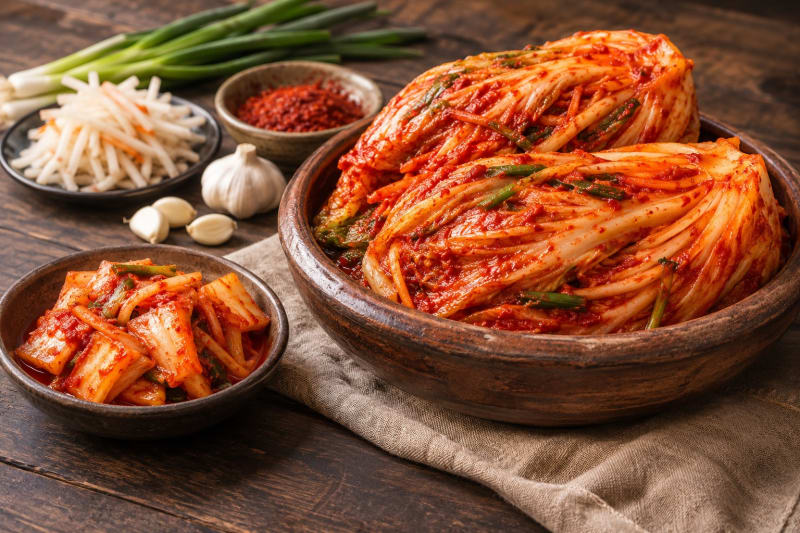
This kimchi recipe makes the classic Korean baechu-kimchi: whole napa cabbage leaves, salted until soft and bendy, then painted one by one with a red paste of chilli flakes, garlic, ginger and fish sauce. Left on the counter for a day or two, it starts to bubble and turns tangy, a little fizzy and deeply savoury. Once you have a jar in the fridge you will find yourself putting it next to everything.
The word kimchi most likely comes from old Korean words for salted vegetables, and the habit of preserving cabbage and radish in salt goes back well over a thousand years. Chilli only arrived in Korea in the late 1500s, which is when kimchi slowly took on the red colour we know today. Every autumn Korean families still gather for kimjang, a day of making huge batches to last the winter, and the tradition is listed by UNESCO as part of the world's cultural heritage.
The technique is simple once you know what each step does. Salting pulls water out of the cabbage so the leaves stay crunchy and the seasoning can soak in. The small pot of rice flour porridge looks odd, but it gives the paste body so it clings to each leaf, and it feeds the good lactic acid bacteria that do the fermenting. Fish sauce and salted shrimp bring the savoury depth, while radish and green onion add crunch and freshness.
Swaps are easy. Use daikon if you cannot find Korean radish, and a grated Asian pear or half an apple can replace the sugar for a rounder sweetness. For a vegan kimchi, leave out the fish sauce and shrimp and use soy sauce plus a little extra salt, or a splash of kelp stock. Gochugaru, the Korean chilli flakes, is the one ingredient that is hard to replace: other chilli flakes are much hotter and lack its smoky, fruity flavour, so order a bag online if you need to.
Serve young kimchi as a crunchy side with rice, grilled meat or Korean BBQ. When it gets older and more sour, it is perfect for kimchi fried rice, kimchi jjigae stew, pancakes and dumplings.
Watch how it is made on our YouTube channel: https://youtube.com/shorts/Sn683XI6-Oo
Watch how it is made
Ingredients
- 2000 g napa cabbage (1 large head)
- 200 g coarse sea saltSubstitute: kosher salt; never fine table salt
- 250 ml water
- 2 tbsp glutinous (sweet) rice flourSubstitute: regular rice flour
- 1 tbsp sugarSubstitute: 1/2 grated Asian pear or apple
- 60 g gochugaru (Korean chilli flakes)
- 4 tbsp fish sauceSubstitute: soy sauce or tamari for vegan kimchi
- 2 tbsp salted shrimp (saeujeot), finely choppedSubstitute: 1 extra tbsp fish sauce
- 30 g garlic (about 8 cloves), minced
- 10 g fresh ginger, grated
- 300 g Korean radish (mu), cut into matchsticksSubstitute: daikon
- 50 g carrot, cut into matchsticks
- 4 green onions, cut into 3 cm pieces
Method
- Split the cabbage. Trim the base, cut a short slit through the stem end and pull the head apart by hand into halves, then quarters, so the leaves stay whole. Rinse the quarters in cold water.
- Salt the leaves. Sprinkle the salt between every leaf, using more on the thick white stems and less on the green tops. Lay the quarters cut side up in a large bowl.
- Turn and keep salting. Every 30 minutes turn the quarters over so they salt evenly. After about 2 hours in total the thick stems should bend without snapping.
- Cook the rice porridge. While the cabbage salts, whisk the rice flour into the water in a small pot and simmer, stirring, until it thickens like thin glue. Stir in the sugar and leave it to cool completely.
- Rinse and drain. Rinse the cabbage three times in fresh cold water to remove the extra salt, then let it drain cut side down in a colander. Taste a leaf: it should be pleasantly salty, not harsh.
- Mix the paste. Stir the cooled porridge with the gochugaru, fish sauce, salted shrimp, garlic and ginger. Let it stand for 10 minutes so the chilli flakes soften and the colour deepens.
- Add the vegetables. Fold the radish, carrot and green onions into the paste until everything is evenly red.
- Season every leaf. Wearing gloves, lift each leaf and smear a little paste over both sides, working from the stem up. Fold each finished quarter in half and roll it into a neat bundle.
- Pack the jar. Press the bundles tightly into a clean jar or container to push out air, leaving about 3 cm of space at the top. Swirl a splash of water in the bowl to catch the last of the paste and pour it over.
- Ferment, then chill. Leave the jar at cool room temperature for 1 to 2 days, pressing the kimchi down once a day, until it smells pleasantly sour and you see small bubbles. Then move it to the fridge, where it keeps getting tangier for weeks.
Use coarse salt and do not rush the salting: under-salted cabbage goes soggy and can spoil, while well-salted leaves stay crunchy for weeks. Keep everything clean and pressed under its own juice, because air is what lets mould grow. Open the jar slowly after the first day since fermenting kimchi builds up pressure and can fizz over. Taste it every day: young kimchi is fresh and crisp, while kimchi that has been in the fridge for 3 to 4 weeks is sour and perfect for cooking.
Frequently asked questions
How long does homemade kimchi need to ferment?
Leave it at cool room temperature for 1 to 2 days until it bubbles and smells sour, then keep it in the fridge. It is good to eat right away, but the flavour is best after about 1 to 2 weeks in the fridge.
Can I make kimchi without fish sauce?
Yes. Replace the fish sauce and salted shrimp with soy sauce or tamari and a pinch of extra salt, or use kelp stock. The kimchi will still ferment well and is fully vegan.
What can I use instead of gochugaru?
Gochugaru has a mild, smoky and fruity heat that is hard to copy. In a pinch use mild Aleppo pepper or sweet paprika mixed with a little cayenne, but the colour and taste will be different.
Why is my kimchi not bubbling?
It is usually too cold, too salty or still young. Give it another day at room temperature. Some batches ferment quietly, so if it smells pleasantly sour it is working.
How long does kimchi last in the fridge?
Properly packed kimchi keeps for 3 to 6 months in the fridge. It gets more sour over time, which is perfect for kimchi fried rice and stew. Throw it out if you see fuzzy mould or it smells rotten.
Why is my kimchi soggy or too salty?
Soggy kimchi is usually under-salted or over-fermented. Too salty means the cabbage was not rinsed well enough. Always rinse three times and taste a leaf before adding the paste.